Our Story & History

Our Story & History

About MDI

It Started With a Question No One Else Was Asking
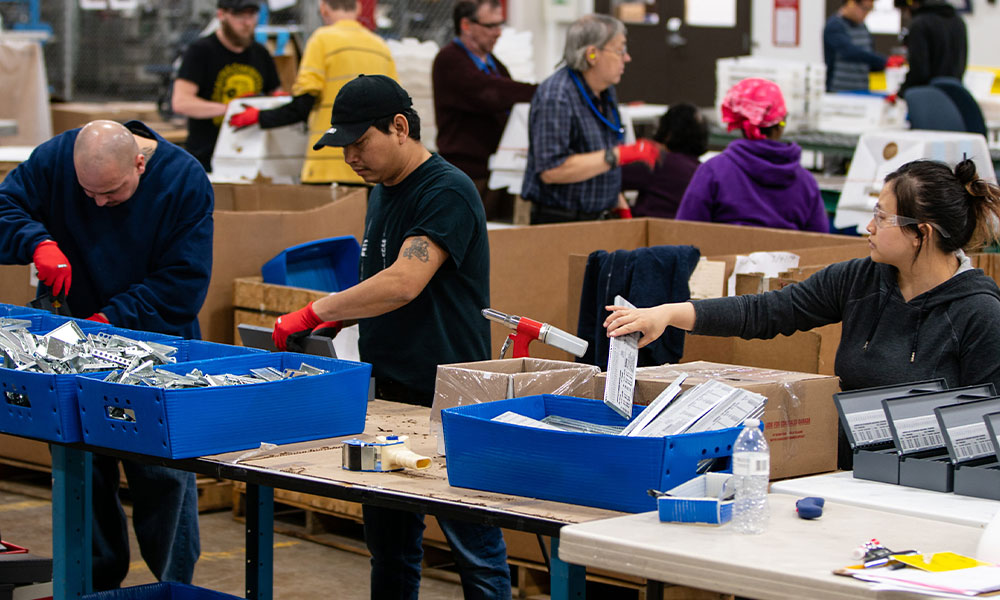
In the early 1960s, Sister Anna Marie Meyers faced a problem: fourteen high school students with disabilities were nearing graduation with nowhere to go—no jobs, no path forward. She refused to accept that.

She founded The Occupational Training Center as an extension of Christ Child School in St. Paul, Minnesota—a place for people with disabilities to learn, work, and build a future. When John DuRand became the first Executive Director, he expanded that vision, launching Minnesota’s first supported work program—built on a belief that would define MDI for decades.

People with disabilities had a right to expect more than kindness. They deserved opportunity.
John DuRand - Founder

A Timeline of Growth and Purpose

1960s

The Beginning

Sister Anna Marie Meyers founds The Occupational Training Center in St. Paul, Minnesota. John DuRand is appointed Executive Director and launches the state's first supported work program.

1970s

Establishing Roots

Manufacturing contracts begin with the United States Postal Service and 3M, two relationships that continue today. The mixed workforce of craftspeople and people with disabilities grows. In 1976, The Occupational Training Center is officially renamed Minnesota Diversified Industries (MDI).

1980s

Gaining Momentum

MDI's electronic assembly capabilities attract new customers and employment grows to 600. A capital campaign raises $2.3 million for building and equipment renovations, setting the stage for the next decade of growth.

1990s

Years of Growth

MDI begins extruding polyethylene plastic, expanding its product capabilities. Two new locations open in Northern Minnesota: Hibbing (1992) and Grand Rapids (1993). The decade closes with MDI moving its headquarters to a newly renovated facility in St. Paul.

2000s

Changing Times

By the mid-2000s, MDI's employment grows to over 400 with a strong focus on expanding commercial business. In 2004, MDI breaks ground to triple the size of the Grand Rapids facility. MDI navigates financial difficulty, engages outside leadership support, and mourns the loss of founder John DuRand in March 2008. In August 2008, Peter McDermott assumes the role of President and CEO, beginning a new era of leadership.

2010s

From Lows to Highs

In 2011, MDI delivers a $2.4 million order to a new customer, Amazon, creating a dramatic impact on employment. MDI produces 75 million USPS flat tubs in 2012. The organization acquires Deer River Hired Hands and purchases the Cohasset building, expanding its footprint. ISO 13485 certification and FDA registration are obtained. A Career Skills program launches. In 2014, MDI celebrates 50 years and moves from St. Paul to its current Minneapolis location. A new $4.5 million facility opens in Hibbing. Polypropylene plastics and White Room medical assembly are added to capabilities.

2020s

Resilience and Reinvention

MDI is deemed an essential supplier during the COVID-19 pandemic and overcomes significant challenges while investing $3.2 million in new manufacturing technology. Employment rebounds from 120 to more than 440 in a single year. Leadership transitions as Eric Black becomes President and CEO. The Unified Work Academy launches, expanding training opportunities across Minnesota and beyond. MDI opens its new Roseville headquarters, celebrates its 60th anniversary, and earns a second USPS Supplier Performance Award. "Do the right things over and over. It will lead to the right results." Eric Black, President and CEO

2024

60 Years Strong

Innovation. Inclusion. Impact. What Has Not Changed in 60 Years The faces have changed. The facilities have grown. The capabilities have expanded. But the reason MDI exists has never wavered. Every contract we take on, every product we manufacture, and every partnership we build is connected to the same mission Sister Anna Marie started in the 1960s: create real, meaningful employment for people with disabilities.

Where We Go From Here

MDI is not standing still. We are investing in new technology, expanding training programs, and building the next chapter of a story that started with one person asking a question no one else was willing to ask.

If you want to be part of that story, as a customer, a partner, a donor, or a future employee, we want to hear from you.


PLASTICS SERVICES SOCIAL IMPACT