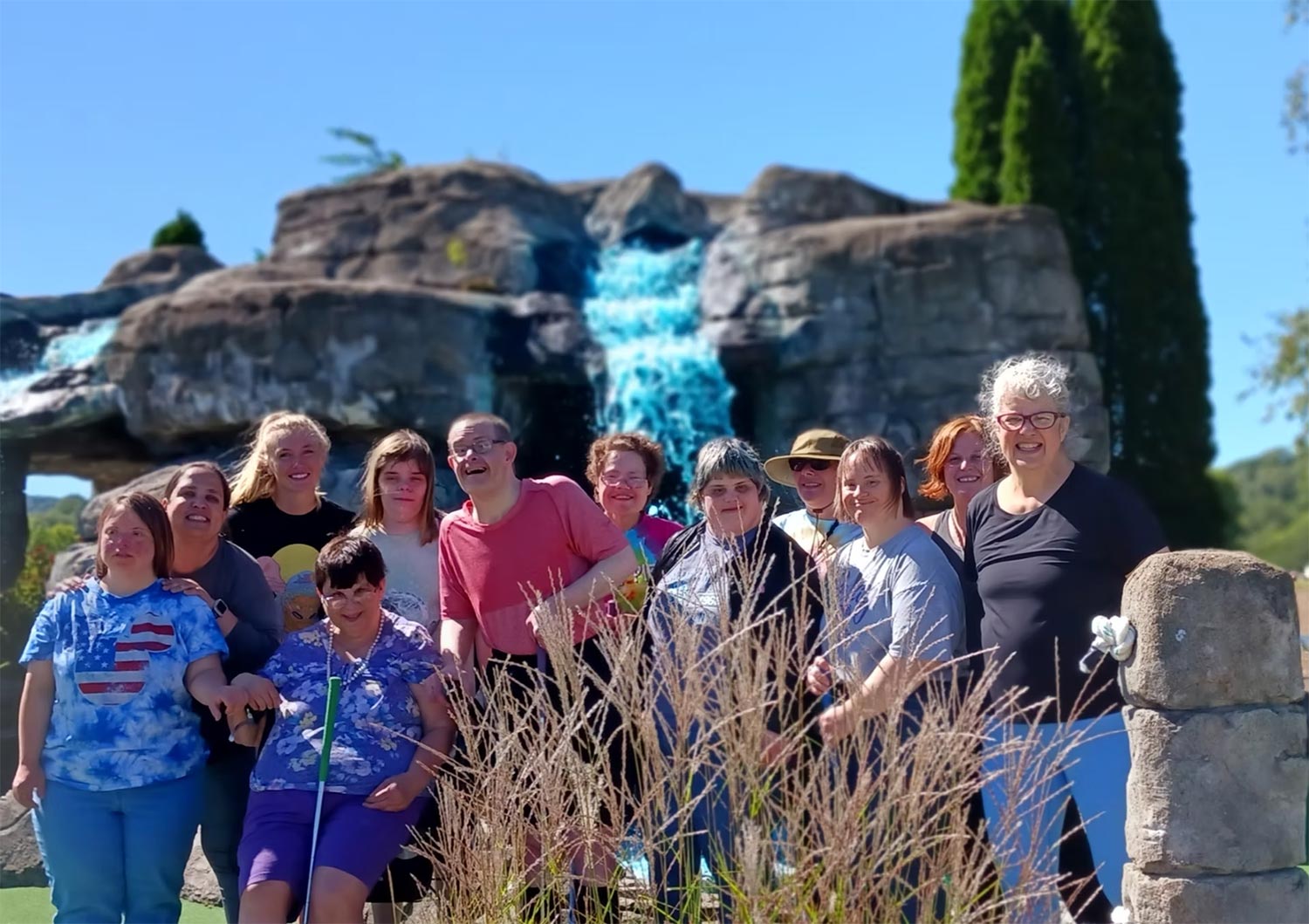
Asher Kujawa builds jobs around the people she serves, one person at a time. A day at the MOHR conference reminded her why it matters.
Asher Kujawa walked into the MOHR ( Minnesota Organizations of Habilitation and Rehabilitation) conference feeling discouraged.
“When you do what I do, there’s just times where you’re like, gosh, I just feel defeated,” Asher said. “Maybe I don’t know what I’m doing.”
Asher is an employment support coordinator at the Wabasha County Developmental Achievement Center, known locally as the DAC. The DAC is a nonprofit day program in Wabasha, Minnesota, and Asher leads its community employment work. The job is to find each person a job that fits who they are, not just a job that happens to be open. It is slow, personal work, and some days it feels like pushing against a wall.
At the MOHR conference, Asher stopped at the Unified Work booth and put on a VR headset.
“That’s what initially sold me on you guys, because I thought that was the coolest thing ever,” Asher said.
Asher saw a way to solve a real problem. When someone comes in with a list of 20 dream jobs, from firefighter to nurse, there’s no way to set up a real tryout for each one in a town the size of Wabasha. With VR, people could try out jobs virtually first.
“I thought it would give me a way to cut this list down to three instead of 20,” Asher said.
Asher left the conference with a new mindset.
“You go to things like that and you’re like, I can do that. I can make that work. That is a great idea.”
October is National Disability Employment Awareness Month, and this year’s theme is Celebrating Value and Talent. Asher’s story shows what that looks like when someone refuses to put people in a box.
Breaking out of the four walls
The DAC opened in October 1970 to offer vocational training in Wabasha County. More than 50 years later, it serves 53 adults with disabilities, aged 18 to about 80. Its mission centers on creating individualized programming tailored specifically to each person’s unique strengths, needs, and interests, breaking away from one-size-fits-all routines.
Asher knows where most of the people she serves come from.
“Most of the individuals we serve come straight out of school or a group home,” Asher said. “They don’t realize what their life could be like outside of these four walls.”
For individuals residing in group homes, daily life can easily turn into an endless loop of predictable spaces and the same limited social interactions, offering little exposure to new opportunities or passions.
Compounding these spatial limitations are rigid societal assumptions. Asher encounters these preconceptions every time she approaches a prospective employer on behalf of the job seekers.
“They see someone with a disability and automatically put them in a box, and a lot of times that box is associated with janitorial work,” Asher said.
Asher sees firsthand the true cost of forcing people into roles they never chose. When individuals are placed in jobs based on stereotypes rather than their real preferences, disengagement and burnout follow quickly.
“I don’t know about you, but I hate cleaning,” Asher said. “If you hate something, you’re not going to have the drive or passion to keep the job, let alone give 100% of your effort and energy.”
The program works actively to break down these confining routines and restrictive assumptions, opening doors to authentic possibilities and activities people truly enjoy.
“It’s trying to break a stereotype that’s been there for a long time,” Asher said. “That’s a very hard thing to do.”
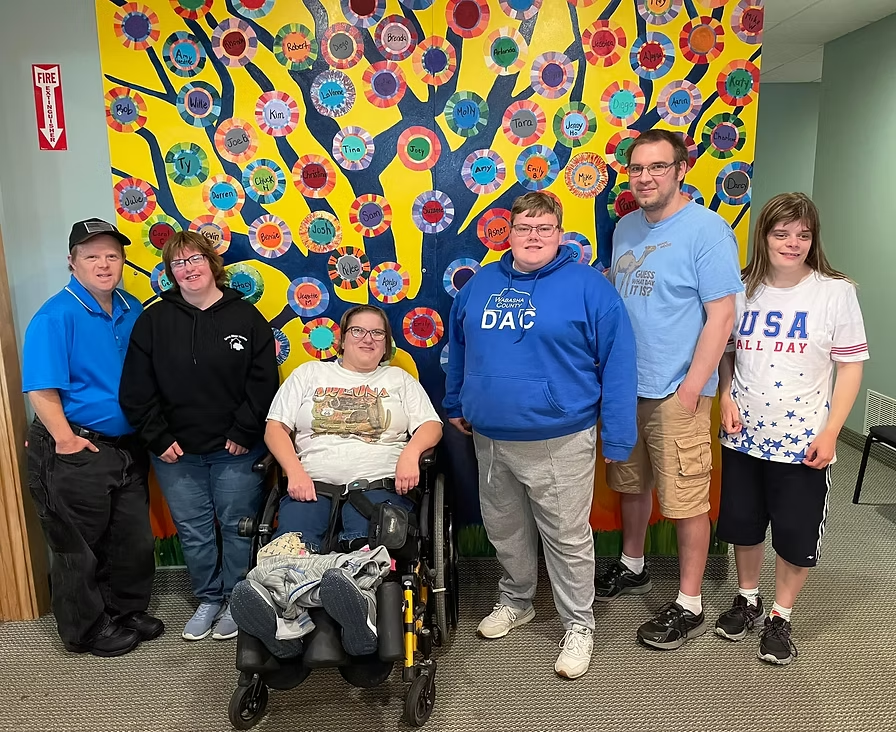
Getting to know someone inside and out
As employment support coordinator, Asher takes the time to understand each person through a 12-week discovery process defined by Vocational Rehabilitation Services (VRS) standards.
“This process helps me get to know someone in the same way you know your close friends,” Asher said. “I essentially find out, over a period of time, what their true skills, interests, talents, and ideal conditions are.”
Asher interviews family members and visits each person at home.
“People operate a lot differently at a day program than they would at home. Each person is different when placed in different settings.”
Then comes the real test.
“I test what the information I’ve gathered is telling me,” Asher said. “An example I can give would be fishing. An individual might tell you how much they love fishing or how cool they believe it to be, but they have never experienced it. I would then take them out to test this interest, and you can gather pretty quickly if they are enjoying the activity or have the skill set to do it.”
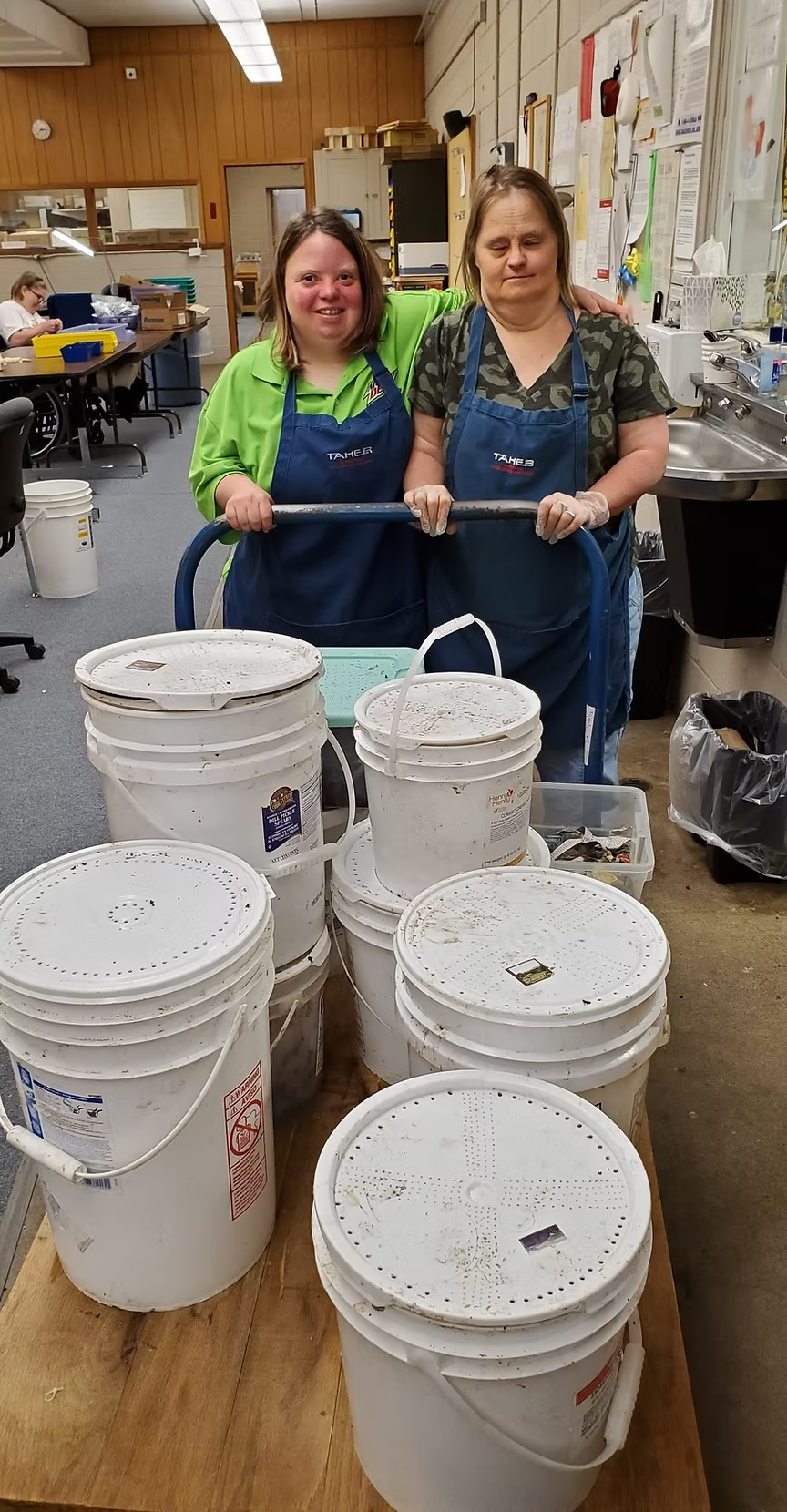 Not charity. A business solution.
Discovery narrows a person’s interests down to two or three themes. Asher then looks for businesses that match those themes and asks what those businesses need.
“We don’t want charity. We want this to be a give and take for both the employer and for the individuals.”
“I go into businesses to find a need they have, and if I have the solution that a job seeker could provide, I present them with it,” Asher said.
The employer hires the person directly and pays them. A job coach comes with every person with a disability, and the employer pays nothing for the coach. Asher goes in first and sets expectations with the new employee and the employer. Then she trains a lead direct support professional, who trains the job coaches. More than one coach learns each job, so someone can always step in.
“The individuals I work with are very smart and capable when it comes to employment,” Asher said. “Their want for a job is sometimes higher than mine or yours.”
A stage in downtown Wabasha
The same approach shapes the DAC’s Community Life Engagement work. Staff learn what each person loves, then find a way to make it happen.
One person wanted to learn guitar. The team found a teacher. Before long, that student was playing an advertised show with their teacher in downtown Wabasha, in front of a crowd.
Others ride horses, volunteer at the food shelf, hike, take pontoon rides, and join a community exercise class that ends with a big fruity drink of their choice. Each person chooses their own activities.
“We give them different avenues,” Asher said.
Understanding boundaries
Leaving the four walls brings new challenges. What feels normal at a day program may not work in a grocery store. Getting a hand on your shoulder from a stranger can feel very different there.
“They should have the tools to navigate that situation,” Asher said. “They should be able to advocate for themselves and say, ‘Hey, I have boundaries, and I don’t like you touching me without you asking me.'”
So Asher signed the group up for Unified Work’s Boundaries at Work class. Taylor from Unified Work taught it in person at the DAC. Asher didn’t know what to expect.
“I didn’t even think that they were going to be that engaged,” Asher said. “But all of the individuals that were in it were very engaged with Taylor.”
Then something happened that Asher didn’t see coming. Weeks later, the lessons were still showing up in everyday life.
“What really blew my mind is they use some of that stuff now. They’ll be like, remember, we had that class. I don’t like that. That’s one of my boundaries. They retain the information.”
“I was very surprised,” Asher said. “They loved you.”
Empowering Disability Employment: Why Inclusive Hiring Works
Building inclusive jobs takes patience: 12 weeks of discovery, a custom-tailored role, and dedicated coaching until the fit is right. But the payoff is transformative: a person doing meaningful work they love for an employer that genuinely needs their talents.
“When you give somebody who has a disability the chance in the community, it opens up a whole new world for them. They realize the opportunities they truly have and that having a dream is attainable.”
This National Disability Employment Awareness Month, we challenge employers to take one actionable step: interview at least one candidate with a disability. Organizations like the DAC have laid the groundwork. The talent is ready to work. Reach out to Unified Work to get started.
See the free training Asher’s group used at unifiedwork.com.